

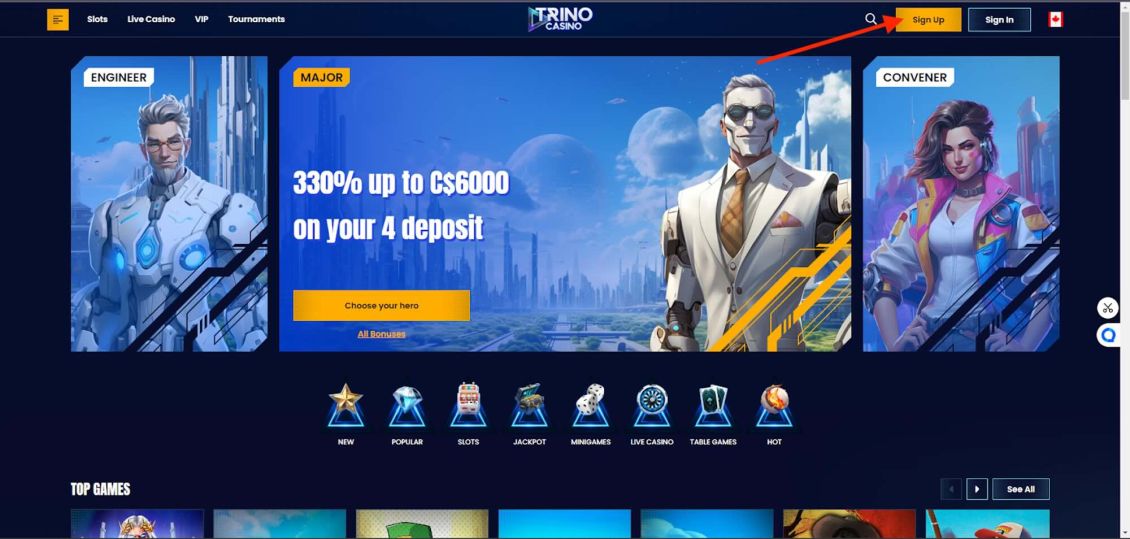
Each player who signs up at an casino trino online registration in Australia eventually hits the same checkpoint: the verification request. At Trino Casino, this step is not a hurdle meant to frustrate users but a regulatory safeguard that protects accounts and funds. The documents requested during this process confirm identity, age, and residential status, and they prevent unauthorised access to a player’s balance. A smooth verification experience depends almost entirely on preparation. When a user knows exactly what is needed, how to submit it, and which small mistakes cause rejection, the entire process can be completed in hours rather than days. This article explains the document types, the sign-up journey that triggers verification, and the practical steps that keep an account secure long after the initial check is finished.
Reasons Verification Documents Must Be Provided at Online Casinos
Identity checks, often called Know Your Customer or KYC, constitutes a legal obligation for regulated gambling operators serving Australian players. Trino Casino, like any conforming platform, is required to collect and assess certain documents before processing withdrawals or, in some cases, soon after registration. The primary goal is to verify that the person behind the account is indeed a genuine, eligible adult who is not employing stolen payment details or a fake identity. Australian anti-money laundering regulations and international licensing standards both call for this extent of scrutiny. Without it, a casino cannot lawfully operate in most jurisdictions.
Beyond legal compliance, verification protects the player in a direct manner. If a password is stolen, a fully verified account with linked identity documents is far harder for a third party to hijack. The casino’s security team can check the original documents if any abnormal login activity occurs. Additionally, verification prevents underage gambling by guaranteeing every user satisfies the minimum age requirement, which in Australia stands at 18. This double function—regulatory compliance and personal security—implies that while the request for a passport scan or a utility bill might feel intrusive, it serves a concrete protective function that advantages the entire player community.
Players sometimes worry about how their private data is held. Reputable casinos use encrypted servers and strict access controls. The verification files are segregated from the main gaming database and are available only to trained compliance staff. Trino Casino’s privacy policy, which every user ought to read before uploading anything, details retention periods and data handling practices in accordance with Australian privacy principles. Understanding that the request is not arbitrary but obligated by law and security best practice aids set the right expectation before the first document is ever photographed.
Payment Method Confirmation: Connecting Your Banking Information
Confirming a payment method is the last part of the KYC puzzle. This step confirms that the player owns the card, e-wallet, or bank account used to deposit funds. It hinders money laundering by guaranteeing that withdrawals are sent back to the same source from which deposits originated. At Trino Casino, this requirement applies to most payment methods, such as Visa and Mastercard debit and credit cards, Skrill, Neteller, and bank transfers. The specific document required depends on the method used for the deposit.
Card Verification
For card deposits, the player is commonly asked to supply a photo of the physical card. To safeguard sensitive data, the casino tells users to obscure the middle eight digits of the card number, leaving only the first six and last four digits visible. The cardholder’s name and expiry date must be clearly shown. The CVV code on the back must be fully obscured or covered. A common mistake is obscuring the wrong digits or leaving the CVV exposed, which the compliance team will flag as a security risk. The photo should be taken in good light, with the card set on a plain background.
Digital Wallet and Bank Transfer
When an e-wallet such as Skrill or Neteller is employed, the player needs to provide a screenshot of the e-wallet account profile page that indicates the registered name and email address. This must align with the casino account details. For bank transfers, a recent bank statement or a screenshot of the online banking profile displaying the account holder’s name and account number is needed. In all cases, the name on the payment method must be identical to the name on the proof of identity. Joint accounts can create complications, and players should reach out to support before depositing from a shared account to clarify what additional documentation may be needed.
The Standard Account Registration and Verification Process
At Trino Casino, the journey starts with a direct registration form. A new visitor enters a valid email address, sets up a strong password, and supplies basic personal details such as full legal name, date of birth, and mobile number. The platform may also ask for a residential address at this stage to pre-fill the verification record. Once the form is sent, the account is established and can be utilized for deposits and gameplay immediately, though withdrawal functions usually are locked until the verification process is finalized.
Sequential Registration at Trino Casino
The sign-up flow is intended to be finished in under two minutes. First, the player presses the registration button and fills in the required fields. Accuracy at this point is essential: a misspelled surname or a date of birth that does not match official records will cause a mismatch later during document review. After the initial details are submitted, the system dispatches a confirmation link to the provided email address. Clicking that link activates the account. At this stage, the player can sign in, explore the game library, and make a first deposit using any of the supported payment methods.
At what point Verification Is Activated
After the first deposit, or sometimes after a total deposit threshold is reached, the casino’s automated compliance system will activate a document request. The player gets an email or an in-app notification listing the specific documents required. Usually, the request includes one government-issued photo ID, a recent proof of address, and, if a card or e-wallet was used, a verification of the payment method. The player then uploads clear photos or scans through a secure portal. The review team examines the files and either approves the account for full functionality or asks for resubmission with specific feedback.
At what point Verification Is Triggered
Timing changes. Some players are asked to verify instantly after registration, especially if the platform’s risk engine identifies a data point that needs early confirmation. More often, the request appears at the first withdrawal attempt. Australian users should anticipate that no significant payout will be processed until all documents are approved. This is standard across the industry. A small number of accounts may also be picked for random spot-checks as part of ongoing due diligence. The key takeaway is that verification is unavoidable, and preparing documents early, even before the request arrives, removes delays when a withdrawal is desired.
Widely Recognised Verification of Identity Documents
The bedrock of any casino verification is the documentation of identity document. Trino Casino approves a typical set of government-issued IDs that are acknowledged internationally and within Australia. The document must be valid and not expired, and it must clearly present the holder’s full name, date of birth, and a photograph. A colour scan or a high-resolution photo taken with a smartphone is the expected format. Black-and-white copies or images with glare, shadows, or cropped edges are the most common cause of rejection at this stage.
Passport and Driver’s Licence
An Australian passport is the most direct option. It holds all required data points in a single document and is universally approved. A state-issued driver’s licence is equally acceptable and often chosen by Australian players because it is always held. When photographing a driver’s licence, both the front and back must be captured, as the rear often holds the address and issue number that the compliance team needs to cross-reference. The photo must be taken against a dark, non-reflective surface, with all four corners visible and no fingers covering any text.
State ID Cards and Alternative Papers
For players who do not hold a passport or an Australian driver’s licence, a national identity card from a recognised issuing country can be employed. The card must be a legitimate, government-issued photo ID. In some specific cases, a proof of age card issued by an Australian state or territory may be taken, but users should verify the casino’s current list of supported documents on the verification page. A Medicare card is not a photo ID and will not be recognised as a primary identity document. The compliance team needs a photograph to verify the person logging into the account, so any document without a photo will be declined outright.
Frequent Verification Delays and Ways to Prevent Them
Even well-prepared players can face delays. Recognizing the root causes of these stoppages enables users to send a clean application right away. The most prevalent bottleneck is poor image quality. A smartphone camera is perfectly capable of taking acceptable documents, but only if the user follows a few basic rules. Natural daylight, a steady hand, and a flat, dark surface produce a significant difference. Photos taken under artificial yellow light or with flash reflecting off glossy ID cards often result in unreadable results.

Image Quality Issues
Unclear text, cut-off edges, and glare are the top three image-related rejection reasons. The compliance team must be able to read every character on the document. A photo where the name is sharp but the date of birth is slightly out of focus will be rejected. Players should take the photo from directly above the document, not at an angle, and guarantee the entire document is within the frame. Cropping tools should be avoided because they can accidentally remove security features or edge markings that the reviewer anticipates to see. If a scanner is available, a 300 DPI colour scan is the ideal format.
Inconsistent Details
Even a single letter difference between the registration form and the submitted document will halt the process. A player who signed up as “Michael” but whose passport says “Mike” will be required to contact support to modify the account or supply a supplementary document. Similarly, a recently moved player whose utility bill shows a new address that does not yet match the casino profile must change the address in the account settings before submitting the proof of address. Diligently reviewing the account details for exact consistency with the documents on hand is the most most effective step a player can take to prevent a back-and-forth with the verification team.
Lapsed Documents
An expired passport or driver’s licence may not be used for verification under any circumstances. The document must be valid at the time of submission. If a player’s only photo ID has expired, the verification will be suspended until a renewed document is obtained. Some casinos may allow a temporary paper licence alongside the expired card as a bridging measure, but this is not certain. Australian players should check the expiry dates on all their documents before starting the registration process and arrange renewals well in advance if they plan to play and withdraw regularly.
Residence Confirmation: Eligible Documents and What Is Denied
The proof of address document verifies that the player is located at the location submitted during registration. This is a different requirement from the photo ID and must be a current document, typically produced within the last three months. The name and address on this document must precisely correspond to the details on the casino account. Even a minor discrepancy, such as a omitted apartment number or a truncated street name, can lead to a rejection. Australian players should be especially careful to the formatting of their address, as the compliance team will review it character by character.
Valid Documents
The most commonly accepted proof of address documents include utility bills for electricity, gas, water, or internet services, bank or credit card statements issued by an Australian financial institution, and official government correspondence such as a notice from the Australian Taxation Office or a state revenue office. A lease agreement may be allowed in some cases, but it is often subject to additional scrutiny. Mobile phone bills are generally recognized if they indicate the name, address, and date clearly. All documents must be in the player’s name; a bill in a partner’s or housemate’s name will not be allowed unless the player’s name also shows up on the document.
Typical Rejection Causes
The compliance team denies proof of address documents for a small set of predictable reasons. The most common issue is an old document. A bank statement from five months ago will not pass. The second most common problem is a mismatch between the address on the document and the address on the account. Even a typo like “St” instead of “Street” can trigger a manual review and delay. Screenshots of online banking pages are not accepted unless they are full, dated PDF statements obtained directly from the bank’s portal. Finally, documents that are cut off, fuzzy, or tampered with in any way are immediately marked.
- Document must be dated within the last 90 days.
- Full name and address must match the casino account exactly.
- Digital statements must be authentic PDFs, not screenshots.
- PO Box addresses are hardly ever accepted; a physical residential address is necessary.
Protecting Your Account After Verification: Login Security and Recovery
Validation is a unique event, but account security is continuous. Once the documents are accepted and the account is fully active, the player’s attention should move to securing the login credentials and recovery options. A validated account with a weak password or no two-factor authentication is a goal. Trino Casino supplies several tools to help users keep control, and using them is far more straightforward than handling an account takeover after the fact.
Two-Step Verification
Two-factor authentication, or 2FA, adds a time-sensitive code demand to the login process. Even if a password is taken, the account cannot be entered without the code created by an authenticator app or sent via SMS. Australian players are firmly advised to enable 2FA right away after verification. The setup process commonly entails scanning a QR code with an app like Google Authenticator or obtaining a setup SMS. Once enabled, each login from a new device will prompt for the code. This single step stops the vast majority of unauthorized access attempts.
Password Reset Procedure
If a player forgets their passcode, the recovery flow begins with the email address used at registration. Clicking the “Forgot Password” link on the Trino Casino login page triggers an email with a secure reset link. The gambler must have access to that email account, which is why keeping the email account itself secure—with its own strong password and 2FA—is critical. After resetting the password, the gambler should choose a new, unique password that is not used on any other site. A password manager can generate and store a complex string that is practically impossible to guess.
Identifying Phishing Attempts
Verified casino accounts are sometimes targeted by phishing emails that mimic official correspondence. These messages may claim that verification has expired or that the account has been locked and ask the user to click a link and enter login details. A genuine communication from Trino Casino will never ask for a password or for documents to be emailed directly. All document uploads happen exclusively through the secure portal after logging in. Gamblers who receive a suspicious email should not click any links and should instead navigate directly to the casino’s website by typing the URL into the browser. Forwarding the phishing email to the support team helps protect the broader community.
A document verification process for an online casino is a structured, predictable sequence that favors preparation and attention to detail. Australian players who collect their passport, a recent utility bill, and a clear photo of their payment card ahead of the request arrives will navigate the KYC check with minimal friction. Following the initial approval, enabling two-factor authentication and safeguarding the registered email account convert a verified profile into a resilient, secure gaming identity. The small effort spent on getting the documents right the first time benefits every time a withdrawal is processed without delay.


